Sharp whistling sounds produced by a hearing aid often occur unexpectedly, creating profound frustration and distraction when ignored. Our audiology providers can pinpoint whether the feedback sound results from earmold sizing, impacted earwax, volume settings, worn-out parts, or an internal malfunction. Discover what produces hearing aid feedback and which home-care techniques can resolve simple issues while signaling when expert clinical repair is required.
Why Hearing Aid Feedback Occurs
That characteristic high-pitched sound is almost universally caused by acoustic feedback. The microphone detects external acoustic signals, the digital processor boosts sound levels, and the miniature receiver channels audio toward the tympanic membrane. Whenever amplified sound escapes the canal boundaries and strikes the microphone, the device re-processes the escaping energy into an audible squeal.
A momentary whistle frequently happens while positioning the aid or when hands, hats, telephones, or personal hugs redirect acoustic energy. While sophisticated digital hearing aids feature adaptive feedback cancellation algorithms, they cannot suppress every momentary acoustic reflection.
Unprovoked whistling during ordinary tasks suggests that amplified audio is escaping past the seal, reflecting off a barrier, or hitting the microphone. The underlying problem should be corrected instead of tolerating the noise or keeping the volume unnecessarily low.
Clinical and Mechanical Triggers for Hearing Aid Feedback
Anything that changes the seal, blocks sound from leaving the receiver, increases amplification, or affects a component may trigger feedback. Feedback issues often evolve slowly across extended use, even when your hearing aid performed flawlessly in the past.
The most common clinical reasons include:
- A custom earmold, standard silicone dome, or custom shell that has not been pushed in fully
- A physical earpiece that has deteriorated, shrunk, or no longer seals against the ear canal wall
- Excessive earwax occluding the canal pathway and reflecting sound backwards
- Wax buildup obstructing the receiver spout, acoustic vent canal, wax guard, or sound bore
- Volume amplification dialed up beyond the acoustic containment limits of the current physical fit
- Mechanical fatigue including ripped domes or aged acoustic tubing that has cracked and hardened
- Moisture or damage affecting the microphone or receiver
- Changes in underlying hearing thresholds that necessitate modified acoustic coupling or software tuning
Jaw articulation while chewing food, smiling, or conversing frequently dislodges an unstable acoustic seal.
We offer comprehensive otoscopic and hardware evaluations whenever the underlying feedback trigger is difficult to isolate.
Is It Hearing Aid Feedback or Tinnitus?
True hearing aid feedback is an external acoustic signal emitted by your hardware. It generally appears only while the hearing aid is on and may change when you adjust the volume, reseat the earpiece, move an object away, or turn the device off. Tinnitus consists of the conscious awareness of sound that lacks any corresponding external acoustic origin. The phantom sound can resemble whistling, continuous buzzing, rushing hissing, rhythmic clicks, or roaring inside the ears. Taking the hearing aid out of your ear will not eliminate tinnitus perception. Wearing properly programmed hearing aids commonly provides therapeutic masking that makes tinnitus significantly less intrusive.
How Can I Fix Hearing Aid Whistling at Home?
Begin with checks that do not require opening the device or placing anything inside your ear. Handle the hearing aid with clean, dry hands directly over a soft cloth to avoid accidental impact trauma.
Proceed through these systematic checks:
- Remove the hearing aid and check the color coding to confirm it is seated in its matching ear.
- Visually examine the silicone dome, custom earmold, acoustic tubing, and receiver port for cerumen, cracks, or mechanical separation.
- Gently brush and clean external ports using the specialized tools and manufacturer instructions tailored to your device.
- Replace a user-serviceable wax guard or dome only if you know the correct method.
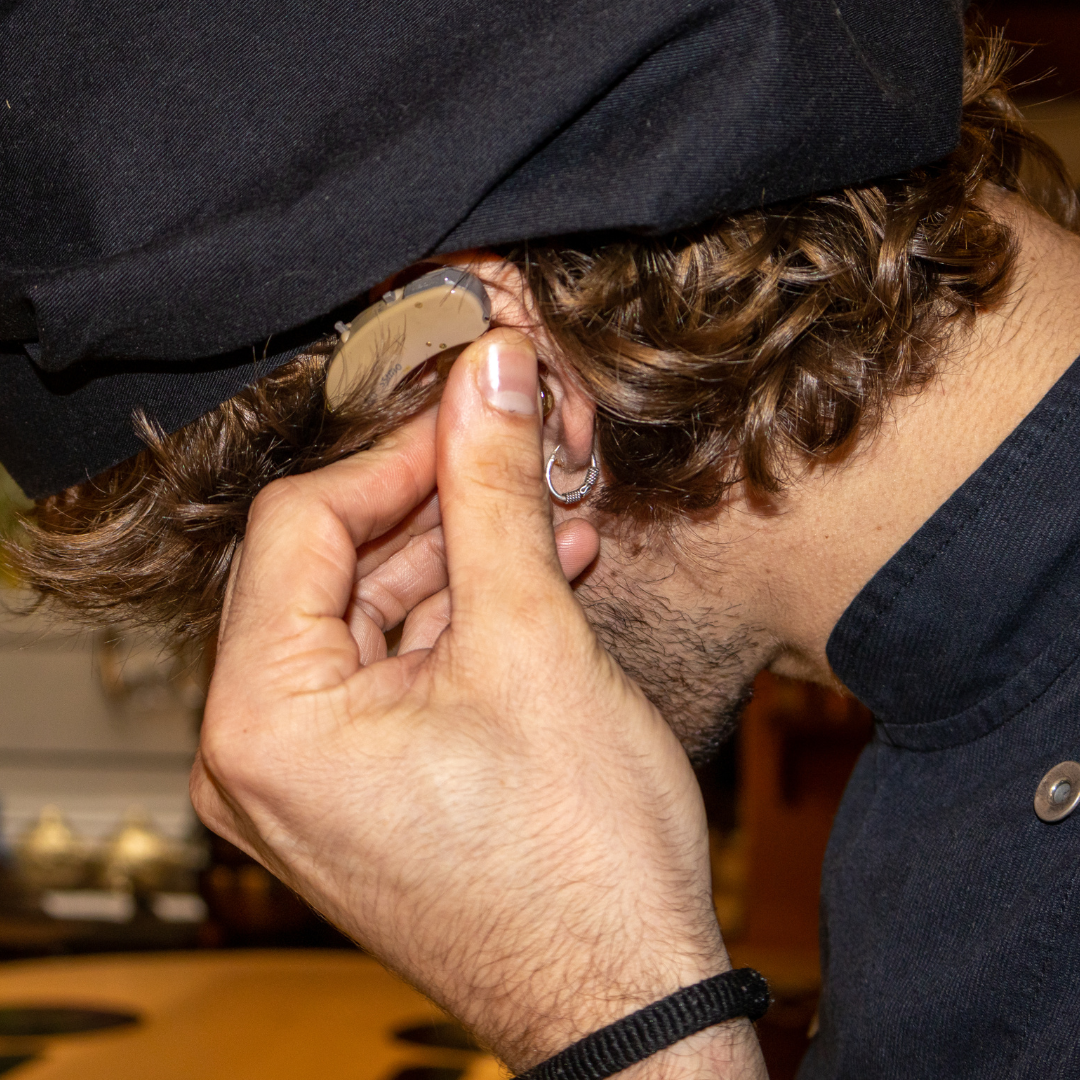
- Reinsert the mold or dome securely and verify that the receiver wire or tubing conforms neatly against your ear.
- Return your volume settings to the baseline prescription calibrated by your audiologist.
- Move hats, hair, phones, and other objects away from the microphones.
- Turn the device off and on again, ensuring the battery is fresh or holds a full charge.
Avoid utilizing water, alcohol, household disinfectant sprays, sewing pins, or sharp metal instruments on hearing aid components.
How Do I Know If My Hearing Aid Is Broken, or If It’s User Error?
Squealing that ceases once you reseat the mold, replace a wax guard, lower the gain, or clear a phone away indicates user-level issues. Whistling produced by a turned-on hearing aid outside the ear represents normal acoustic physics, as there is no anatomical seal. An internal hardware malfunction is far more probable if squealing persists despite ideal canal insertion, pristine wax guards, default volume levels, and a snug fit. Further red flags for device damage include audio distortion, intermittent transmission, severely muffled output, non-functional controls, random shutdowns, charger connectivity issues, or battery corrosion. Compromised acoustic tubing, damaged external receivers, degraded microphone elements, or fractured internal transducers necessitate professional clinical service.
Compare the affected device with the other hearing aid if you wear two, but do not swap left and right devices between ears. We can run performance tests and determine whether cleaning, programming, replacement parts, or manufacturer repair is appropriate.
How to Recognize an Improper Hearing Aid Fit
Your hearing instrument should remain completely secure in the canal without generating tenderness or heavy pressure sensations. Poor fit may allow amplified sound to escape, particularly while talking, chewing, or moving the jaw.
Possible signs include:
- Recurrent whistling episodes during ordinary communication and tasks
- An earpiece or dome that repeatedly slips outward from the canal opening
- A receiver wire that bows away instead of following the ear
- An earpiece that physically displaces whenever you smile, chew, or talk
- Localized ear soreness, tissue redness, surface chafing, or tender pressure spots
- A blocked or plugged sensation that does not improve
- Acoustic volume that noticeably fluctuates whenever you push the earpiece inward with a finger
Ear canal cartilage naturally shifts across the lifespan, and silicone domes, PVC tubing, and earmold shells undergo continuous wear. Solutions can include resizing your silicone dome, selecting an alternate receiver wire length, replacing stiff tubing, ordering a newly cast earmold, or adjusting digital frequency gain.
Schedule a Hearing Aid Maintenance Consultation
Experiencing persistent acoustic feedback does not automatically mean you need to purchase new hearing aids. Book an appointment with our clinic for a detailed examination of your ears, auditory status, physical coupling, and electroacoustic hearing-aid performance. We can help you discover whether you need cerumen clearance, clinical programming adjustments, replacement domes or tubing, a newly cast earmold, or professional manufacturer repair.
Call or message our clinic today to schedule a thorough hearing aid check.